
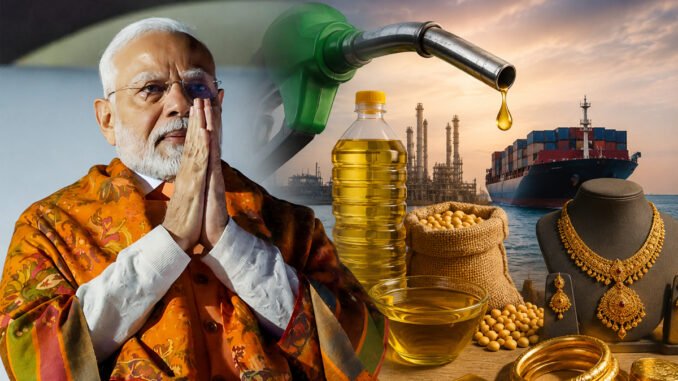
Facing mounting global economic pressure, Prime Minister Narendra Modi has called on citizens to adopt strict austerity measures—reduce fuel consumption, limit cooking oil usage, stop buying gold for a year, and revive work-from-home practices—to protect India’s foreign exchange reserves.
Addressing a public gathering in Secunderabad, Telangana, Modi underscored how ongoing geopolitical tensions, particularly in West Asia, are exerting a “deep impact” on India’s economy. He pointed out that the country remains heavily dependent on imports for essential commodities such as petroleum products, cooking gas, edible oils, fertilisers, and precious metals. With global supply chains still fragile after the pandemic and further strained by conflicts like the Ukraine war, prices of these commodities have surged worldwide.


In this context, Modi framed austerity not merely as an economic necessity but as a form of national duty. “Patriotism is not only about sacrifice in extraordinary times; it is also about responsible living in everyday life,” he said, urging citizens to consciously cut down consumption.
On fuel usage, the Prime Minister advised people to minimise reliance on petrol and diesel. He encouraged the use of public transport such as metro systems, carpooling, and railways for freight movement instead of road transport. Those owning electric vehicles were urged to prioritise their use.
Reviving the work-from-home culture—widely adopted during the COVID-19 pandemic—was another key suggestion. Modi argued that remote working, online meetings, and virtual conferences could significantly reduce fuel consumption and ease pressure on foreign exchange reserves.

He also appealed for a reduction in edible oil consumption by at least 10 percent per household. India imports a substantial portion of its edible oil requirements, making it a significant drain on foreign currency. Lower consumption, he said, would not only benefit the economy but also improve public health.
Perhaps the most striking appeal was on gold consumption. Modi urged citizens to refrain from purchasing gold jewellery for at least one year, regardless of social or ceremonial occasions. Highlighting that gold imports heavily impact foreign exchange reserves, he invoked past instances when citizens contributed gold during national crises.
Turning to agriculture, the Prime Minister called for a 25–50 percent reduction in chemical fertiliser use, advocating a shift towards natural farming methods. He warned that excessive chemical usage is damaging soil health and could threaten future crop productivity. Additionally, he promoted the adoption of solar-powered irrigation systems over diesel-run pumps.


Modi also advised citizens to postpone foreign travel plans for a year. With outbound tourism contributing to foreign exchange outflow, he suggested exploring domestic destinations instead, noting that India offers abundant travel opportunities.
Overall, the Prime Minister’s message was clear: in a time of global uncertainty, safeguarding the nation’s economic stability requires collective restraint and conscious choices by every citizen.

Leave a Reply