
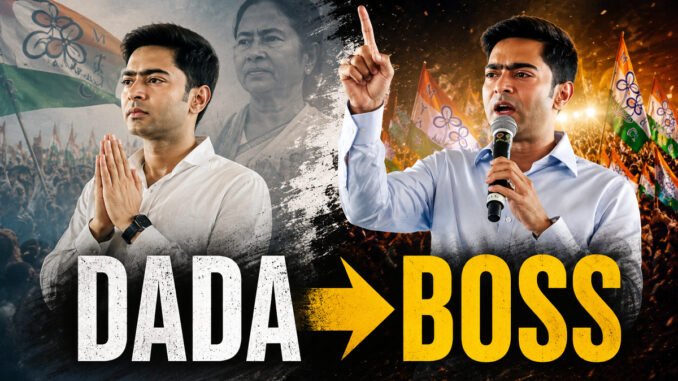
Once seen as the quiet nephew in the background, Abhishek Banerjee rose to become the most powerful figure in Trinamool Congress after Mamata Banerjee—but with the party now facing a major electoral setback, questions are mounting over whether his rapid ascent reshaped the party at a cost.
Abhishek’s political journey began subtly during the Singur আন্দোলন, where he was first publicly noticed sitting behind Mamata Banerjee during a protest. After the Trinamool Congress came to power in 2011, he was gradually given space to build his own influence within the party. Despite the presence of an existing youth wing, Mamata allowed him to create a parallel organisation named ‘Yuva’, marking the beginning of his independent political identity.


In 2014, Abhishek entered Parliament from Diamond Harbour, a constituency considered a safe seat for the party. Over three consecutive victories, he transformed it into a stronghold of his own, consolidating his position within the party. Following the exits and sidelining of several senior leaders, he emerged as the party’s national general secretary and, effectively, its second-in-command.
His rise, however, came with a significant shift in the party’s internal dynamics. Veteran leaders who once formed Mamata Banerjee’s core team gradually lost influence, while a new set of loyalists aligned with Abhishek began to dominate organisational structures. Critics within the party allege that decision-making became increasingly centralised, with access to top leadership narrowing for grassroots workers.
From Heir Apparent to Power Centre: Abhishek Banerjee’s Rise Under Scrutiny
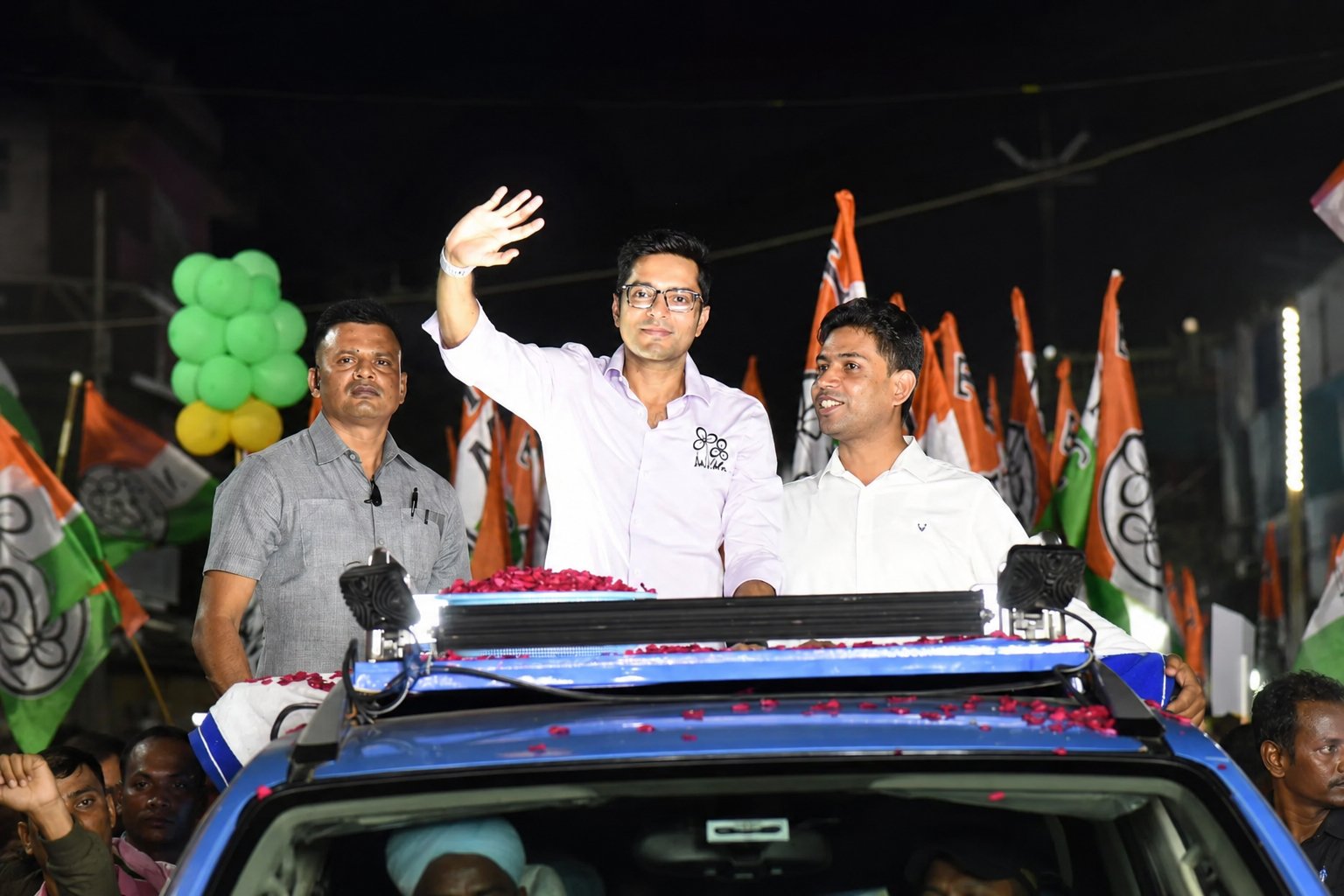
The introduction of political consultancy firm I-PAC marked a turning point. While initiatives like Lakshmir Bhandar and Duare Sarkar helped the government achieve electoral success in 2021, many within the party argue that reliance on data-driven strategies came at the expense of emotional connect with workers. “A company runs on data, but a party runs on emotion,” is a sentiment often echoed by dissenting voices.

Abhishek’s influence extended beyond the party into governance and parallel initiatives. Programmes like ‘Sebashray’ and branding efforts such as ‘Ek Dake Abhishek’ signalled a shift toward a more personalised political model. Supporter groups began identifying themselves not just as followers of ‘Didi’ but also as ‘Dada’s loyalists,’ reflecting a dual power narrative within the party.
However, this transformation also triggered discontent. Long-time party workers felt marginalised, replaced by newcomers or overlooked based on consultancy feedback rather than grassroots credibility. Attempts to overhaul candidate lists and introduce new faces further deepened divisions between the old guard and the new leadership.
The concept of a ‘Diamond Harbour model’—a governance and organisational template built around Abhishek’s constituency—was projected as an alternative political approach. But critics argue that it reinforced perceptions of a parallel power structure, blurring the lines between party and administration.


With the party now facing electoral decline, many within its ranks are openly questioning whether this shift contributed to its weakening. The debate over whether Abhishek’s corporate-style politics diluted the original ‘Mamata model’ is gaining traction.
As Trinamool navigates a challenging political phase, the spotlight is firmly on Abhishek Banerjee. Can he reinvent himself as a unifying leader and reconnect with the party’s grassroots base? Or will his leadership style continue to polarise opinion within the ranks?
The coming months may well determine whether he evolves into the leader the party needs—or remains a symbol of its internal contradictions.

Leave a Reply