
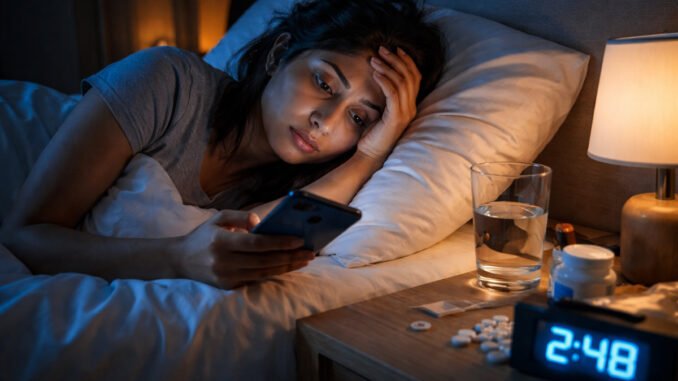
Tossing and turning in bed, scrolling endlessly on a phone at midnight, and finally dozing off just before the morning alarm rings — this has become a familiar routine in many Indian households. A recent nationwide survey paints a worrying picture: nearly 46% of Indians are not getting even six hours of uninterrupted sleep at night. Experts now warn that the country may be facing a serious “sleep crisis,” driven by modern lifestyle habits, rising stress, and excessive screen time.
The survey, conducted across 393 districts, found that more than 89,000 people are suffering from insufficient sleep or insomnia-related issues. A significant portion of respondents reported sleeping less than six hours per night, a duration widely considered inadequate for maintaining physical and mental health.


The problem appears to be more severe in large cities. Busy work schedules, late-night routines, and increasing dependence on digital devices are pushing people’s sleep cycles further into the night. Many working individuals reportedly do not go to bed before 1 AM or even 2 AM, significantly reducing their overall sleep duration.
The survey also highlights a gender difference. Women appear to suffer slightly more from insomnia than men, according to the findings. Medical experts suggest that hormonal changes, mental stress, and multiple responsibilities at home and work may contribute to this trend.
Doctors explain that the human body functions according to a natural biological clock, often referred to as the circadian rhythm. Just as the body has a fixed time for hunger, it also has a natural schedule for sleep. When that rhythm is disrupted, sleep problems begin to develop.
Even though the body rests during sleep, the brain remains active. During this period, important processes such as cell repair, memory consolidation, and nervous system recovery take place. This is why people feel refreshed and mentally alert after a good night’s sleep. When the sleep cycle is disrupted, fatigue, poor concentration, and irritability become common.
A key hormone involved in regulating sleep is melatonin, which is released in darkness and signals the body that it is time to sleep. However, modern habits — such as watching television late at night, working on laptops, or using smartphones in dark rooms — expose the eyes to blue light. This light suppresses melatonin production, making it harder for the body to fall asleep.
People working night shifts are particularly vulnerable to sleep disorders. When work schedules frequently change between night shifts and day shifts, the body struggles to adjust. This irregular pattern disrupts the natural sleep cycle and leads to chronic sleep deprivation.


Beyond work patterns, the digital lifestyle itself has become one of the biggest contributors to sleep problems. Even when physically exhausted, many people continue scrolling through social media or watching videos for hours before bed. This constant stimulation keeps the brain active and delays the onset of sleep.
Health experts warn that long-term sleep deprivation can lead to memory loss, neurological issues, mental stress, and even depression. Maintaining a regular sleep routine — going to bed and waking up at the same time every day — is considered one of the most effective ways to restore healthy sleep patterns.

Leave a Reply